


Oak Barrels
Oak barrels have been part of winemaking tradition for centuries, playing a central role in the structure, aroma, and ageing potential of wines and spirits. Barrels are the tools that manage oxygen exchange, color stability, aromatic profile, texture, and overall balance. At Bright Up, we work closely with selected cooperages whose craft is driven by tradition and extensive research and development. Careful wood selection, long seasoning, and signatured toasting are all part of this balance between tradition and innovation- when we come to chose our suppliers. Our experience covers a wide range of formats, from classic Barriques to Demi-Muids, Foudres, and Oak Tanks, allowing us to help producers choose the right vessel for their style and scale.


Our Tonnelleries
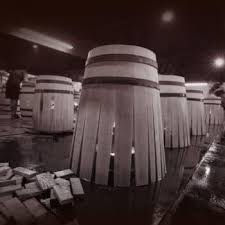
Bright Up works with a select group of Tonnelleries- Seguin Moreau, Doreau, Vernou, and Millet- known for their quality, consistency, research, and tradition. Our long-standing relationships with these Tonnelleries are built on trust, and a shared commitment for quality and reliability. Each of them brings a distinct style and identity, by their selection of oak, seasoning, and signature toasting.
Together, they represent the best of oak tradition, research and expertise, enabling us to offer producers top-quality barrel options ,for all styles of wines and spirits.
 |  |  |
|---|---|---|
 |  |  |
 |

Oak Types
Oak displays a natural affinity with wine, imparting tannins, flavours and an aromatic complexity. The oxygen transmission between the barrel and the wine (also known as micro-oxygenation) greatly contributes to the color stability, polymerization of tannins, and the ageing potential of the wine.
There are hundreds of species of oak, which can be broadly divided into two categories- red and white. Red oaks are porous and for that reason are not water tight enough to hold liquids. White oak is mainly used for wine and spirit making and is divided to: American oak, French oak, and Eastern European oak.
American oak (Quercus Alba) tends to be more aromatic than French or Eastern European oak, especially in Lactons (whiskey lactons)- imparting stronger Coconut and Vanilla flavours to a wine. It is also higher in tyloses therefore can be sawn rather then the French and eastern European oak (Quercus Robur and Quercus Petraea) which needs to be split. European oak tends to give more structure to the wine, with more delicate aromatics of vanilla and gentle spice.
Our partner cooperages source the finest European and American oak, alongside Acacia wood, known for its delicate florality and freshness to white and Rose wines, and non-oak barrels as chestnut, better known for the spirits industry.


Grain
The choice of grain will have a defining influence on the wine's elevage.
Contrary to popular belief, tight grain (fine or extra-fine grain) has more vessels and therefore is more porous than wide grain or semi-fine grain. A tighter grain barrel will be more aromatic than a semi-fine grain barrel, which will give the wine more tannins in a shorter period of time.
Also important to remember that the higher porosity of tight grain doesn't necessarily mean more micro-oxygenation. Barrel permeability is more influenced by wood anatomical factors such- as tylosis filling the wood vessels, or by coopering practices such as, assembling the staves and the intensity of toasting.